
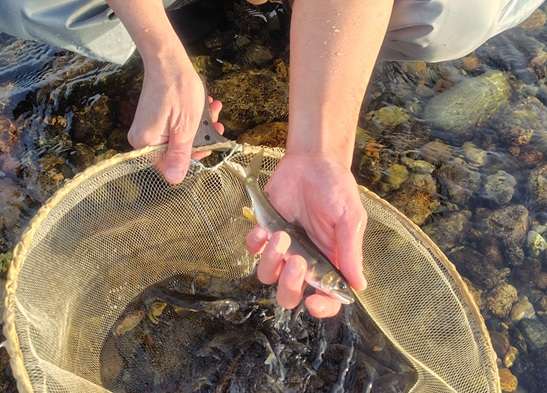
Lure fishing for Ayu on the Nagara River
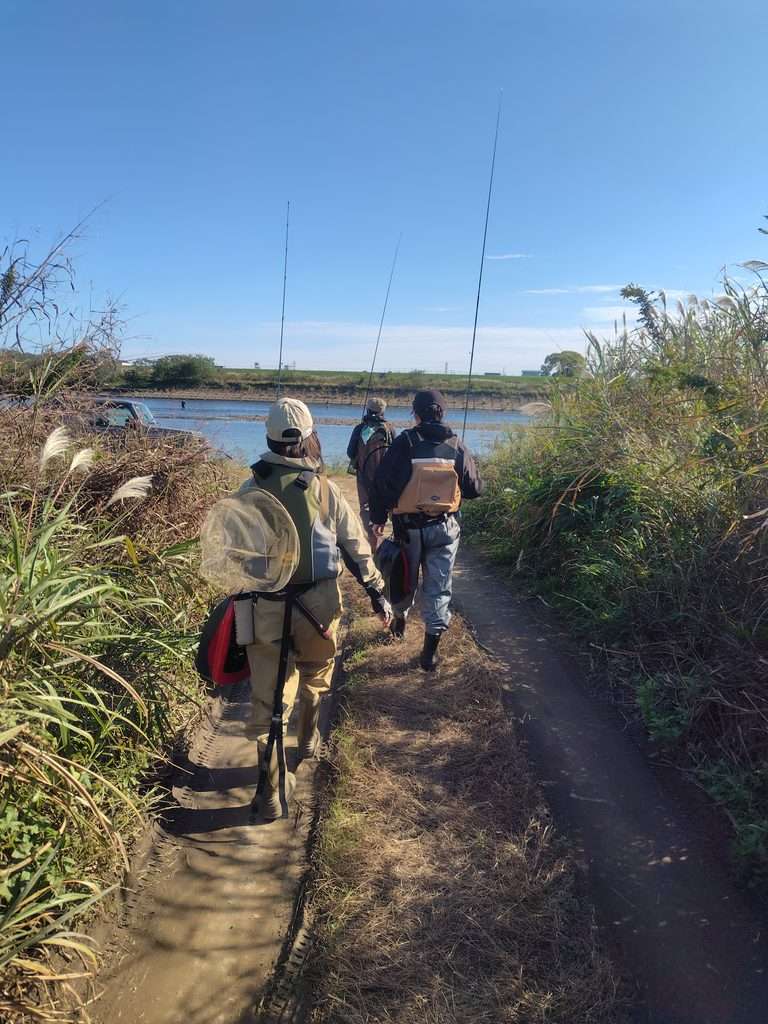
It was a family affair indeed. On the second day of my trip to Seki City of Gifu Prefecture, Seiji took me along with his wife and 21 year old son, who like me was his first time fishing for Ayu on a lure. After we took several minutes to put on waders and a belt to hold the fish basket (livewell) in place, we were off to the river.
The Nagara River is part of the Kiso River system, well-known for it exceptional water quality. Gravel beds provide habitat for many species of fish and wildlife, including the Ayu. I often fish Tokyo Bay, which is in stark contrast to the Nagara River with its vastness and peaceful stretches. Driving along the river, I noticed several fisherman placing nets across the entire width of the river (about 100m across). Very few are allowed this method, and are often part of fishery management.
Ecology and habitat of Ayu in November
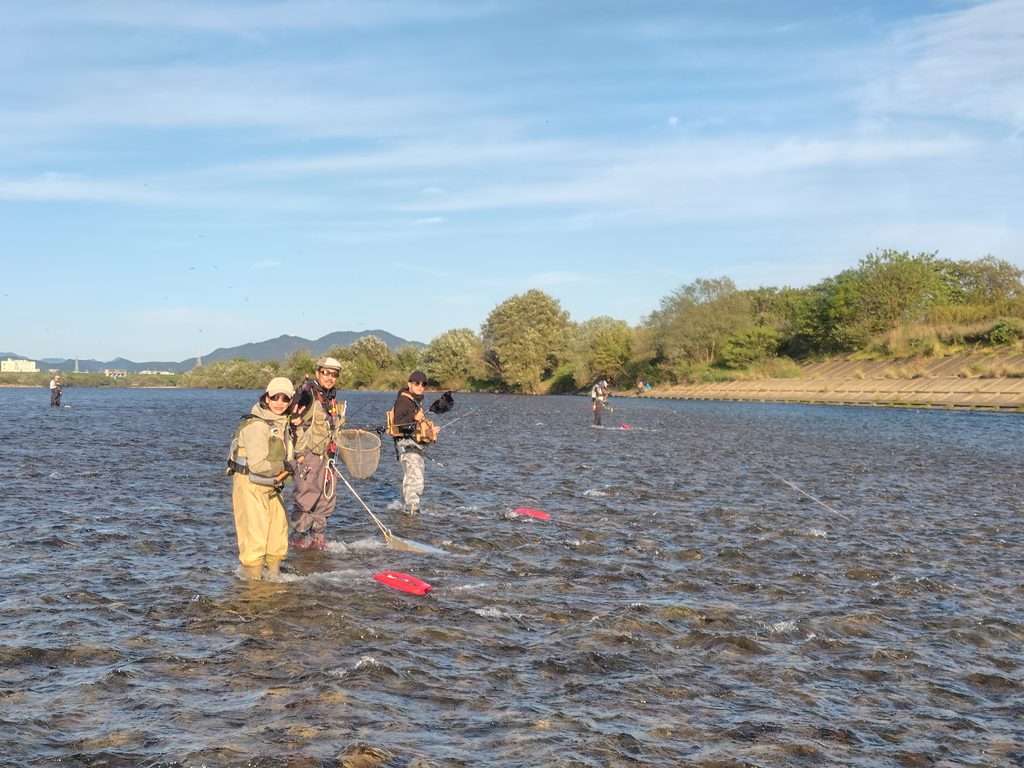
Water levels were less than knee high, which made wading into the center of the Nagara River, quite easy. For most of the year, the Ayu prefer cold currents and riffles and hold along submerged algae-covered rocks. Ayu are a “one year fish”, beginning their lifecycle out at sea, migrating upstream in the Spring, growing in the Summer, and moving downstream to spawn and die in the Fall.
Since we fished at the beginning of November, which is the last time for Ochi-Ayu, the fish were caught in quantity – one of the few times during the year when even beginners have their luck.
Fishing technique for Ayu in November
Tomo-zuri, directly translating to fishing using a “friend”, or live Ayu as bait is the traditional method. Ayu are caught not on an actual eat, but by the Ayu bumping against the the bait to protect its territory. For much of the year, fisherman are keen on this territorial behavior. The largest fish are said to occupy the rocks with the best algae growth.
We used a fairly new technique with shad-like lures on a straight retrieve, mixing in twitches. The hook is a fairly small three point treble hook connected about four fingers distance from the end of the second eye. My biggest catch (about 20cm) was caught retriving almost directly against the current along the biggest riffles. But in all honesty, the sweetfish were caught on almost every cast on this day.
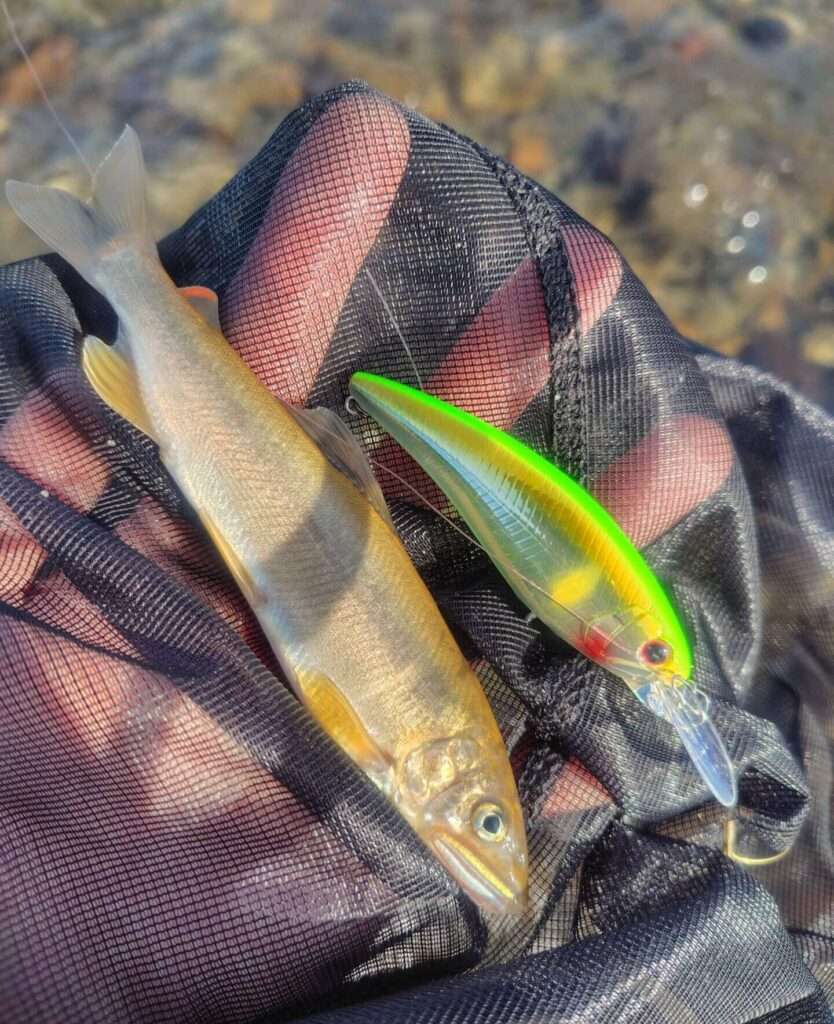
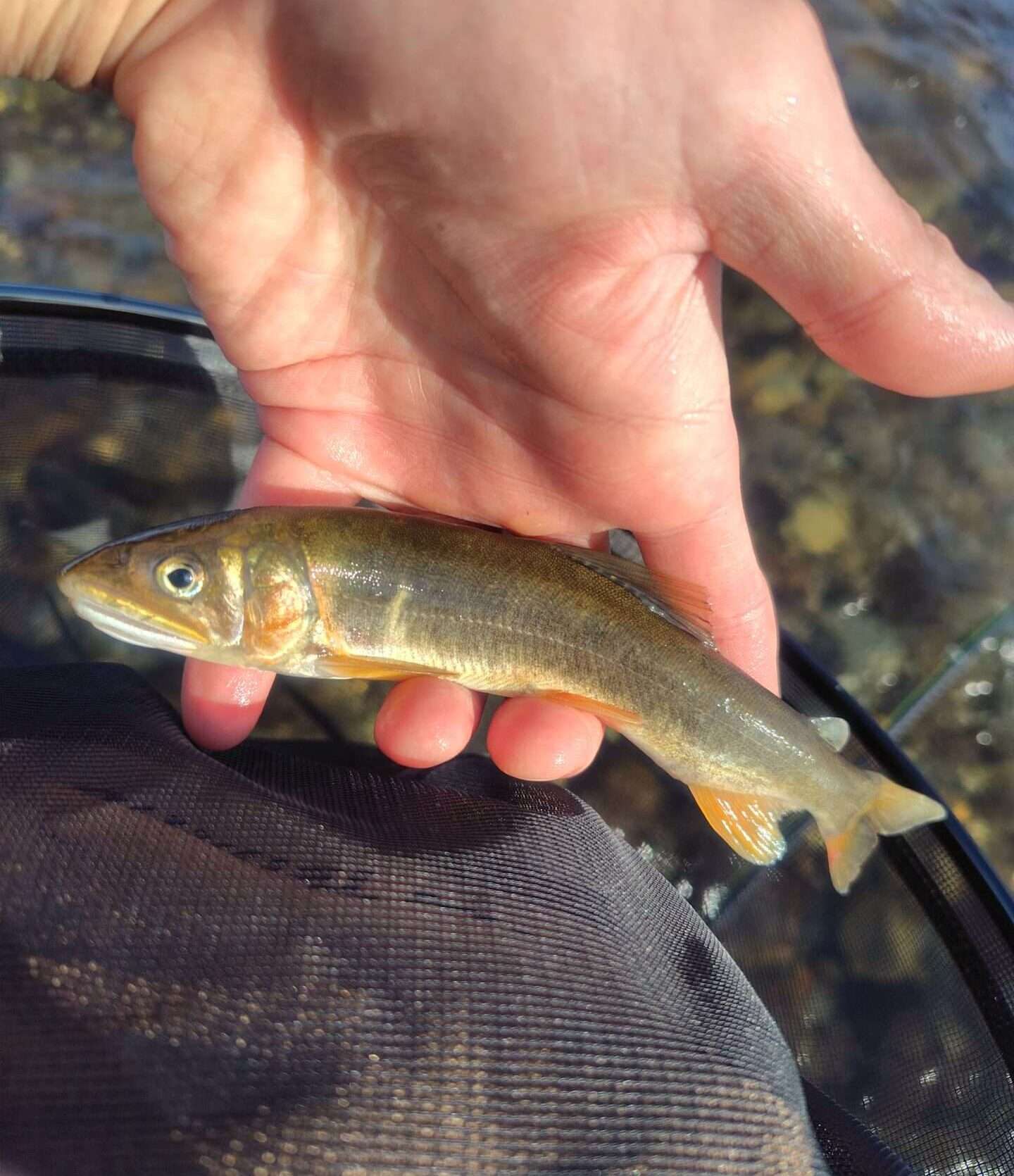
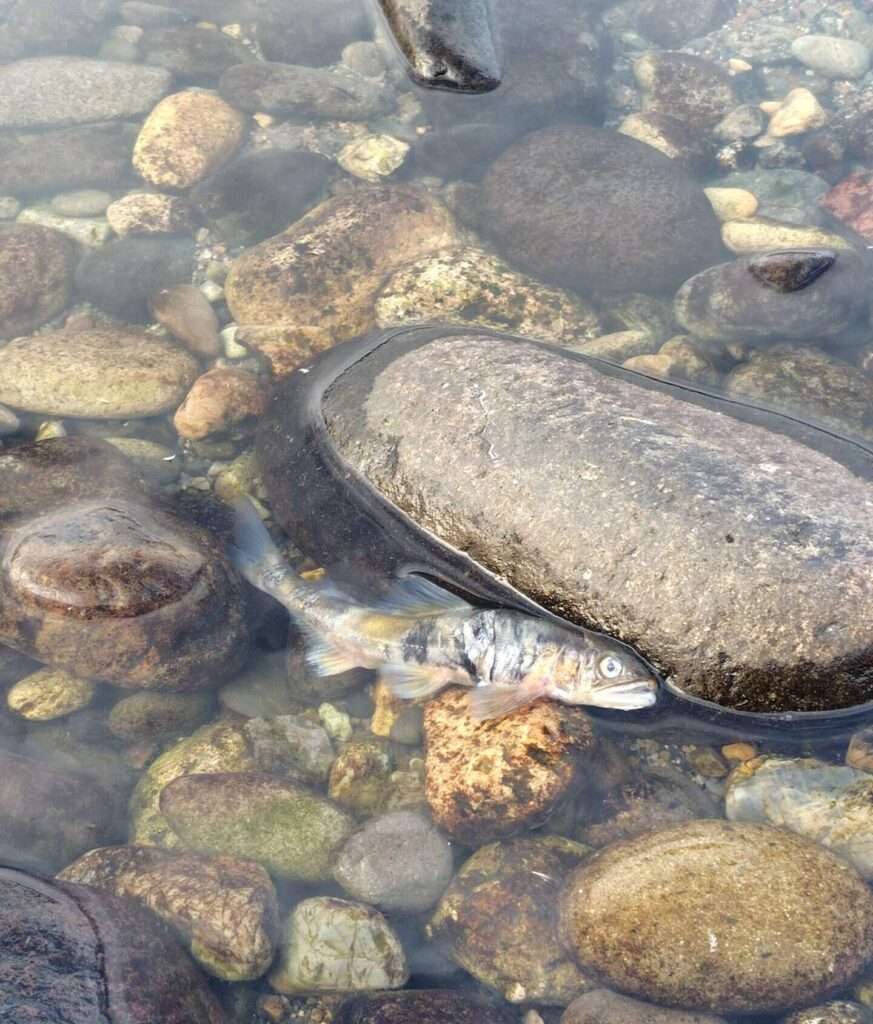
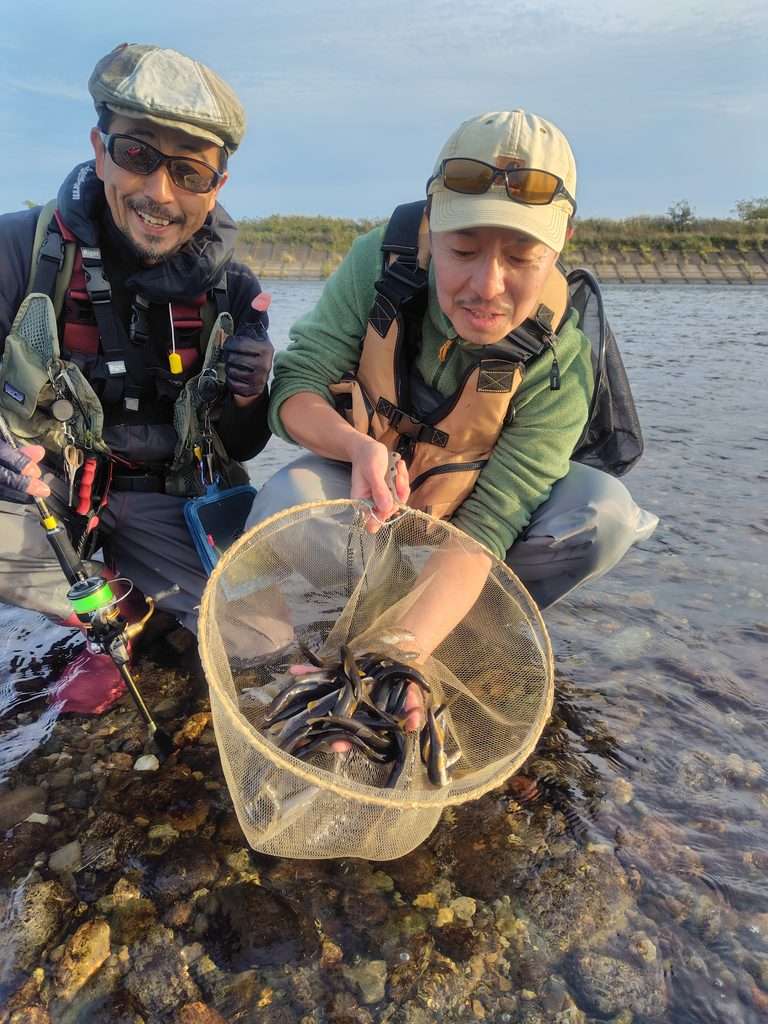
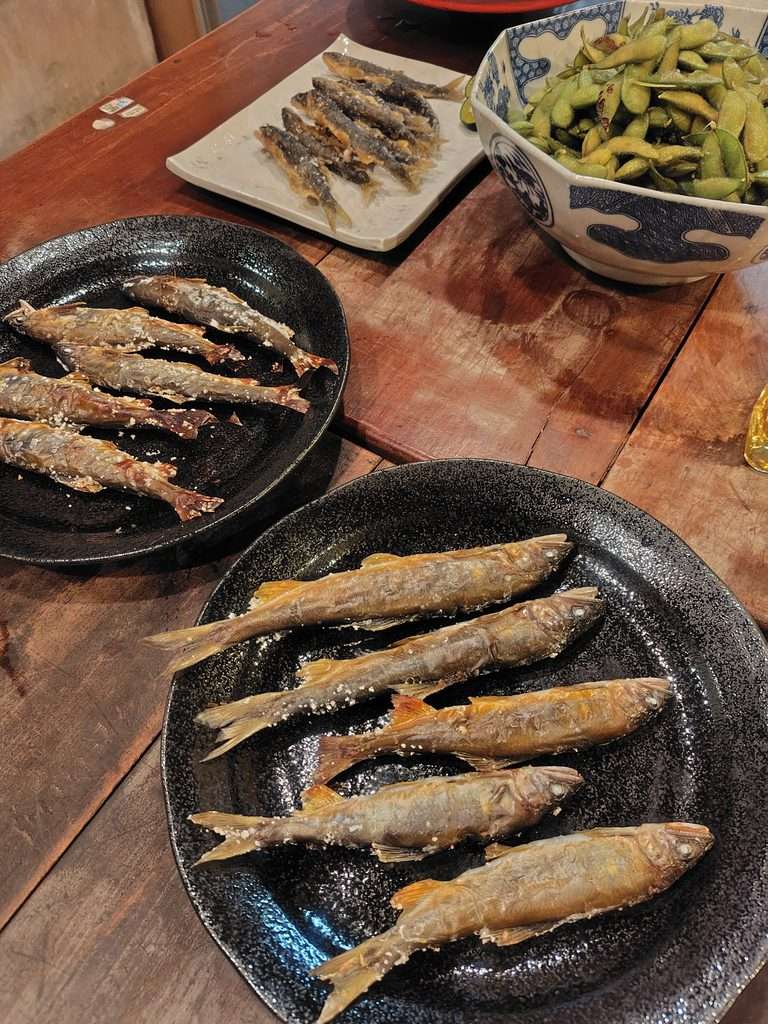
A big thank you to Seiji and his family for taking me on a very productive fishing session along the Nagara River.
For other fishing opportunities in Japan, please check my Fly flying in Iwate Prefecture post as well.
New to fishing? We can provide all gear and tackle. Summer can be more difficult for fishing but can produce bigger sized fish. With Fall season (October and November) being relatively easy. Lodging and food are also inclusive.
Need a quote or have questions? I’d be happy to answer them!
Hope to see you on the water!
